

Have you ever dreamed of being at peace? Leaving your life as you know it and moving to a beach island. Selling all your belongings and buying a boat to set sail at sea. Meeting that special someone that completes your life. Travel, beauty, status and love: the four pillars of Western culture upon which our economy is built. However, no matter where you go, there you are. Anxiety and all.
You have good reason to be anxious. You are a vulnerable physical being, a complicated network of fragile organs all biding their time before eventually letting you down, catastrophically, at a moment of their own choosing. We have insufficient information upon which to make most major life decisions: we are steering more or less blind. We are saturated with media that convince us we are not satisfied. We live not far from the savage animal community and carry in our bones- into the suburbs- the fear of savagery encroaching on us. We rely for our self-esteem and sense of comfort on the love of people we cannot control and whose needs and hopes will never align seamlessly with our own. The world we live in is rife with wars, threats and instability and our fundamental biology tells us to procreate and bring more children into this.
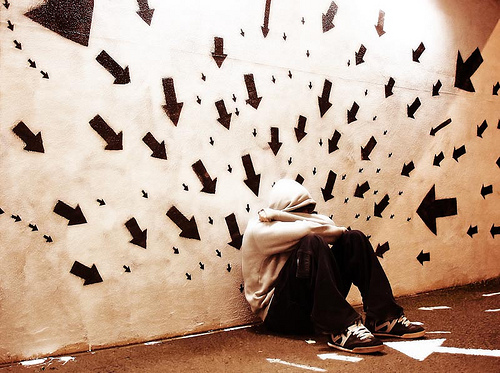
But is it all futile?
 Viktor Frankl was a Jewish doctor, psychologist and philosopher. He lived from 1905-1997. He and his sister survived the Nazi concentration camp. His mother, father, brother and wife all died at the camp. He was prisoner 119,104. He was working on a manuscript that was his life’s work before he was arrested. He sewed it into the lining of his coat when he was arrested by Nazis only to lose it during his transfer to Auschwitz. His manuscript was titled The Doctor and the Soul. He watched those in the labor camps perish after they lost all hope in the future. But he kept busy recalling the text of his manuscript and rewriting it on secret bits of paper. It gave him purpose and meaning when his life was deteriorated and wickedly oppressed. The following is his theory on anxiety.
He called his form of therapy logotherapy, from the Greek word logos, which can mean study, word, spirit, God, or meaning. I find logos to be personally meaningful since my mind immediately thinks of The Word and what more influential text is there when it comes to a person’s existential condition? It is the last sense Frankl focuses on, although the other definitions are never far off. Comparing himself with the other great Viennese psychiatrists, Freud and Adler, he suggested that Freud essentially postulated a will to pleasure as the root of all human motivation, and Adler a will to power. Logotherapy postulates a will to meaning.
Frankl also uses the Greek word noös, which means mind or spirit. In traditional psychology we focus on “psychodynamics,” which sees people as trying to reduce psychological tension. Instead, or in addition, Frankl says we should pay attention to noödynamics, wherein tension is necessary for health.
People, maybe even unknowingly, desire the tension involved in striving for some worthy goal! Perhaps one perverse interpretation of this yearning we see in popular culture is the ‘drama queen’, people who seek out drama but for vain purposes. It could be an unconscious desire for tension that if used in the affirmative would be for a higher purpose.
“Being human is being responsible — existentially responsible, responsible for one’s own existence.” –Viktor Frankl
Animals have instincts that guide them, reducing the burden of ‘choice’. Historically, societies have replaced instincts with traditions and mores that guide us. Today, we hardly even have that. It has become increasingly difficult to avoid facing the fact that we now have the freedom and the responsibility to make our own individual choices in life, to find our own meaning. And because of this responsibility we are afflicted with anxiety.
 I am reminded of Lars Von Trier’s film Manderlay in which there is a fictional town in 1930’s Alabama where slavery still reigns. A progressive young woman comes into town trying to transform it from slavery to free democracy only to ultimately find out that the slaves wish to keep the status quo and persist in following ‘mam’s’ code of conduct manual, which the eldest slave enforces. This twisted irony gnawed at me. Could it be that the people would rather have a mindless totalitarianism than a burdened freedom?
Frankl suggests that one of the most conspicuous signs of anxiety in our society is boredom and because of boredom we fill our lives with stuff. Pleasures, power, conformity, OCD’s, hatred, anger, indifference, etc. He attributes anxiety to man’s attitude to his surroundings, how he lets his surroundings affect himself. It is the obsession with oneself that leads to anxiety and in extreme conditions ultimately leads to loss of hope or futility. Could it be a coincidence that anxiety is developing more rapidly in our modern Western culture in which we are told ever so increasingly to ‘look inward’ for meaning, to love yourself before you can love someone else? We find self worth from the amount of likes, views, and followers we have, from the performance we give with our curated identity. We live in an age of narcissism. ‘It’s not you, it’s me’ really is accurate these days.
In the labor camps Frankl witnessed people die upon losing all hope but he also witnessed people find meaning despite their suffering. That is one thing your captor, oppressor, authority, can never take from you: the spark in your soul and the attitude with which you process your experience.
How to find meaning?
Experiential values. This is by experiencing something we value such as great art or natural wonders or showing love to a beloved, beyond just loving them as objects but loving them meaningfully.
Creative values. This is doing a deed. Becoming involved in one’s creative project such as art, writing, invention, music, so on.
Attitudinal values. This is finding meaning through such virtues as compassion, bravery, a good sense of humor and believe it or not; suffering.
“Everything can be taken from a man but one thing: the last of the human freedoms — to choose one’s attitude in any given set of circumstances, to choose one’s own way.” –Viktor Frankl
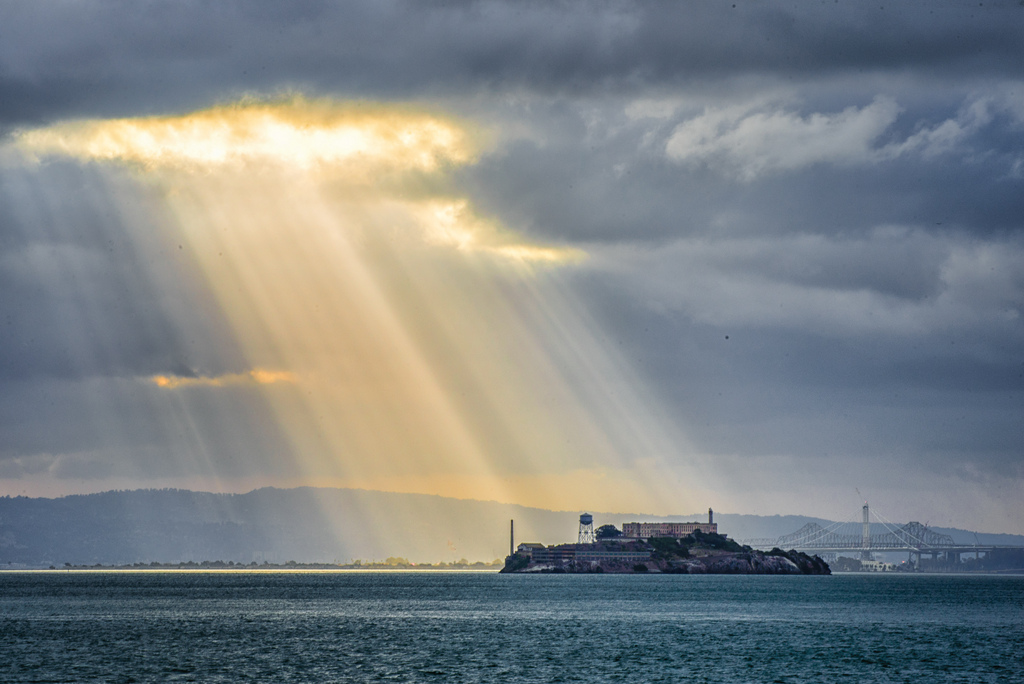
Ultimately, however, experiential, creative, and attitudinal values are merely surface manifestations of something much more fundamental, which he calls supra-meaning or transcendence. Suprameaning is the idea that there is, in fact, ultimate meaning in life, meaning that is not dependent on others, on our projects, or even on our dignity. It is a reference to God and spiritual meaning.
This sets Frankl’s existentialism apart from the existentialism of someone like Jean Paul Sartre. Sartre and other atheistic existentialists suggest that life is ultimately meaningless, and we must find the courage to face that meaninglessness. Sartre says we must learn to endure ultimate meaninglessness; Frankl instead says that we need to learn to endure our inability to fully comprehend ultimate meaningfulness, for “Logos is deeper than logic.”
A relief is that transcendent meaning doesn’t have to be invented. It is already written into the complex and amazing fabric of the universe and we, free-willed, consciously reflecting persons need only discover it or, rather, pay attention to it.
 Witnessing Why